There's No Place Like HOME for Holiday Reading!

Monday, December 21, 2015


Greetings of the season my friends!

It's Jennifer from Stories and Songs in Second, stopping in during this busy holiday week to share good cheer and a unique type of reading celebration with you!  Know that I write this post as the sun rises over Bonita Beach in southwest Florida.....a place that my own family has called "home" for the holidays for sixteen years.

Many of my siblings are waking up slowly around me as I type, warming their hands around a mug of coffee or cocoa  with books open on their laps.  We were fortunate to be "raised as readers" by our Mom and Dad, and I am here today to share a creative way to help other teachers and parents encourage children to make time to honor and enjoy reading magic at home!

Today's idea was inspired by a very special Nordic picture book and an Icelandic tradition that I recently learned about!  I hope that you'll find that it is an easy one to adapt for use at home during the winter break, and then implement in your classroom afterwards!


My friend Kylie from Ripper's Resources  posted this photo on her Facebook page this morning, and I was immediately enchanted!  I had the sudden urge to go to Iceland to experience their Christmas Eve tradition of Jolabokaflod, and did a Google search to find out more!  This article from NPR revealed that the tradition of "The Christmas Book Flood" began during World War II when currency restrictions limited the quantity of imported gift ware in Iceland.  Restrictions on imported paper were more lenient though, thereby making books the holiday gift of choice.  That tradition has continued ever since.


My twist on this "Book Flood" tradition is this...

Imagine each member in your family choosing a favorite book they already own, wrapping it up, tagging it with their name and the reason why they love the story inside the package so much, and tucking it under the tree.


Then, on Christmas Eve night, when the family gathers together, the gift books are opened and either read to a partner, read aloud, or read alone in comfy pajamas with hot chocolate for refreshment before bedtime!


I am also thinking of hosting a "Welcome Back from Winter Break Book Flood" during the first week of January for my students!  I think it will be a wonderful way to introduce and enjoy the new books Santa delivered to our classroom, and get the group talking about the books they hopefully read with their families over vacation.

The "favorite" book that I will "gift" my students with during our classroom "Book Flood" will be the stunning, special saga of a sweet little girl named Anja who dreams of becoming one of Santa's elves. Even though Christmas will be over, the story's theme of perseverance and patience will be a good one to help us start the new year off on the right foot.  I hope that the opening line of
A Christmas Wish, created by the husband-and-wife team of Lori Evert and Per Breiehagen, draws my students in and captures their imagination.  I cannot wait to share it with them!

Long, long ago, in a place so far north that the mothers never pack away the wool hats or mittens...


I've included a link to these free gift tags and a writing page for you to use if you'd like.  Click  to {HERE} download the pages below!  


If you're looking for more ways to promote family literacy and engagement in your school community, be sure to check out my friend Em's post about the Readbox At Home she coordinates. There is nothing better than putting books into the hands and hearts of families that do not have access to quality literature, and I hope to enlist the help of some of my literacy initiative parent volunteers in January to do the same for my school community! Em also set up a YouTube channel for her colleagues to upload videos of themselves sharing their favorite books!  Imagine......tuning in for a bedtime story read by teachers from your school every night of winter break! What a special experience!

As always, I thank you for your loyal readership, and wish you these important things as 2015 draws to a close and 2016 begins...

Good books.
Good times.
Good stories.
Good rhymes.



3

Engaging Our Students At Home

Saturday, December 19, 2015
My winter break has officially started.  Woot, woot!  How about you?  It is a magical couple of weeks off that are filled with family, friends, food, and fun.  It is exciting, somewhat relaxing, and eagerly awaited; however, there is also be a hint of anxiety.

Why, you may ask?

It is two weeks off for me...but also my students.  We have worked hard over the past few months and sometimes two weeks off can impact the upward swing or momentum of our learning.  This ties right back in to the posts that we wrote about Summer Reading by Richard Allington and the need to have reading routines in the homes of our students.  These routines can help to prevent any sliding backwards.

And really this is (one) of our ultimate goals: Encouraging lifetime learners and lifetime (anytime) readers!
We want to light the fire in our students so that they WANT to read at anytime or anywhere.
In August, I had mentioned one way that I was going to try to light that fire in my students: through a Readbox.  Basically the idea was to roll out a cart everyday filled with books for families to check out with his/her student.  They read the book, return the book, and check out another book.  The hope is that families begin to establish more routines for reading when the books are high interest and readily available to them each day.  (If you want to read the full description of how we do it, just click on the image below).

http://curiousfirsties.blogspot.com/search/label/reading

It is now December and here is what we have found:
  • Our students ask for the box to be rolled out daily
  • Over 1,500 books have been checked out (in a school of about 200 students)
  • Most families are returning "customers" that come each day
  • Students are eager to talk about the books they check out
  • Students request books and book titles
  • There is excitement each time new books are added
 To us...this has been a success.

But two weeks without this routine, made me a little worried.  I still wanted those books in their hands.  I didn't want the routines to end!  So the Readbox is now in phase two.  And we call it...."Readbox at Home."  It is our way of engaging our students at home with high interest books and they get to listen to all their favorite teachers!

Here's what we decided to do:

1. We set up a YouTube channel and called it "Readbox at Home."


2. The teachers at my school have decided to videotape themselves reading a book either in their classroom, next to their Christmas tree, or maybe sitting by a fire.  Then the videos are uploaded onto our YouTube channel.

3. We passed out "business cards" and recording sheets to all the families in our school so that they would know how to access the videos at home.

KG fonts
I am nervous, excited, and eager to see if the families utilize the videos at home.  If we find it to be successful, it may become a new routine for the teachers and families!

Be sure to check back because Jennifer will have some more tips to get our students reading over the holiday break!


2

A-Mazing Fun!

Wednesday, December 16, 2015

Hello, everyone!  It's Andrea from Reading Toward the Stars with a fun and easy trick for getting students to focus on reading letters and words.  I love using mazes to help them read various different things and focus on it.

A few years ago, I found this wonderful video from Teacher Tipster.  Have you seen him?  He has AMAZING and simple ideas that anyone can use!!  This one was so easy I used it that very day!  You simply take any maze, add words, letters, math problems, etc. to it.  Then the kids have to follow the path to the end.  If they get to a "dead end", they have to go back and read all of the words they went over {or whatever you have for them to do}.

Here is a video because he explains it soooo much better than I ever could!


Here are some examples I have used in the past.

 I put the letters in order in the correct places in the maze.  There are other letters in the maze at dead ends.  To get through the maze, the students must go in the correct order.

A finished maze!
 This maze has CVC words in it.  To get through the maze correctly, they need to follow the short a words.  Other CVC words are placed throughout the maze.
And we're there!
  The students LOVE these, and they are so easy to make.  Here are some sites with some good FREE mazes!  Or you could always use coloring books pages with them in it.

Krazy Dad ~ "books of mazes"
Mazes Online
Print Activities.com ~ Has letter mazes to print
All Kids Network ~ LOTS of FREE mazes!

Or just "Google" free mazes and see what you get ~ LOTS of free mazes!

Hope this is something fun your kids will enjoy too!  Any grade level would love this because you can get some really intricate mazes and put in vocabulary or math problems for the older crowd.  My third graders love when I make these for them too!  I love watching and listening to them work them out!


1

State Christmas Books

Monday, December 14, 2015
It's Jen from An Adventure in Literacy here today to share some state specific Christmas books. I'm featuring the Virginia books, but if you change the title to your state you can find most of the other states on Amazon. I've used these books in my classroom and they are always a hit. Students love recognizing local places they have been. 


The Twelve Days of Christmas in Virginia by Sue Corbett

This book is part of "The Twelve Days of Christmas in America" series. Each state book mirrors the 12 Days of Christmas...with a little state flair. In addition to being super books, most are written by local authors. Search Amazon for "The Twelve Days of Christmas in America" or insert your state in the title.
Santa is Coming to Virginia by Steve Smallman

Join Santa and his reindeer as they fly over famous state sites.  You can find some regional versions of this book too. There is even a Santa is Coming to Washington DC to cover those patriotic symbols and monuments. Santa truly is everywhere! Search Amazon for your state.

Wishing all book lovers across the country loads of holiday cheer!


0

Using the Think Aloud Process in Five Easy Steps

Tuesday, December 1, 2015


If you have struggling readers who seem to be word callers, than this post is for you. Check out how the Think Aloud Process can help you scaffold instruction for your students in this post.

Do you get blank looks sometimes when you ask a question? Maybe you get through a full explanation for activities and have that one student raise his/her hand to ask, "So what are we going to do?"  Well, you do not need to look far for a meme of what the teacher's look would be, do you?  I think we'd all agree that we want our students to be...
  • Active listeners
  • Engaged with deep thinking
  • Working with purpose
  • Attentive to detail, and...
  • Strategic with their reading
In other words, students need to think while they are reading or listening to reading. This isn't an automatic process for some of our little people (hence the blank stare image above), BUT, it can become automatic with scaffolding through the process.

The Think Aloud Process is a teaching strategy used to model how readers think as they read. In order to appropriately demonstrate Think Aloud, teachers need to use it with every text they share with students. This is a must because thinking as we read is critical to comprehension, and when the focus of reading a text is solely on reading accurately and decoding, then what we create are students who become word callers. That said, we know that there are multiple skills required for successful reading and that readers work through a channel of reading skills to reach the instructional reader stage. Here is a visual model to show that process.
Beginning readers learn the alphabet and sounds, learn to track print accurately, develop a sight vocabulary, and work through text to read the words on their own. Once they are able to do this, they become transitional readers. Transitional readers focus on developing fluency as they build vocabulary, comprehension skills, and continue working on decoding larger words. Once they are able to read on their own silently, the focus shifts to deeper comprehension and vocabulary development. Throughout this process, Think Aloud is a tool that scaffolds our readers to be able to independently think as readers as skills are achieved. 


To model thinking aloud for your students, the first step is to choose a text with points that can be discussed. Prior to reading the book to your students, go through the text with a post it pad and pen. Mark the places where you want to pause and share your observations and thinking. Note-it is very, very important for the students to also see and work with the text. You can project the book with an Elmo or take photos prior to sharing. There are many books shared on Youtube also, so you may check to see if a title you are planning to use is available there. 


Once your talking points are identified and you've secured a way for your students to access the text, it is time to demonstrate. For my students, I will often use a column notes organizer like the image to the left. This organizer is for the book, Snowflake Bentley. As you share the book with your students, you want them to use all text features including illustrations, captions, sidebars, and the context of the text as the evidence of their thinking, so be sure to ask key questions directed to those features. 

Some students work well with a visual cue of what they are to think as they're reading. This bookmark helps students trigger that thinking and reminds them of the language we as teachers have used.

Once you have modeled with Snowflake Bentley or a book of your choice, you have to provide an opportunity for practice. Choose another book on a similar theme or one that will extend your lesson, and pair students for the reading experience. "Elbow Partners" are great for talking out our thinking. During this part, provide the bookmark or sticky notes that students can use in their discussion. 


The final tip I have is to make sure that you repeat this activity often with new texts. If students have trouble, you may need to stop and model thinking aloud again for students, but you can also direct the thinking with deep questions.

I hope this walk through of the process shows how it can be used with any text. It is so so valuable for our struggling readers. 

You can access this freebie using the image below. 


Although this is the process, it does not stop there. The final step is to have your students reflect on what they've taken away from the reading. This helps our students recognize the importance of using all aspects of the reading process and to understand what good readers do to be good readers. In my teaching, I always seize an opportunity to write, and having students reflect on this as they write may provide the teacher with a window into the students' thinking. 

Until next month, happy reading AND thinking!

If you have struggling readers who seem to be word callers, than this post is for you. Check out how the Think Aloud Process can help you scaffold instruction for your students in this post. Freebie included.
Pin for Later

0

Bringing Books to Life

Saturday, November 14, 2015
November is a fun month because many of us help our students peer into the lives of people long ago.  And for our really little guys, this can be quite a challenge.  Time is so abstract.  I remember a day when everything that happened in my girls' lives was "yesterday."  Understanding the actual difference between a day, week, month, and year is challenging.  And then we start talking about 100 or more years ago. Phew!  That is hard thing for them to imagine.

Last year my teammate and I made the decision to use the Laura Ingalls Wilder books (My First Little House series) to support our informational writing unit.  Honestly, we were not sure how it would go.  Would they enjoy books that revolve around a family that lived in the late 1800s-early 1900s?  Would the boys connect to main characters that are primarily girls (but there are a few books that focus on Almanzo)?


What we found was that...YES...all our first graders absolutely loved the books.  They were able to pull information from these texts to learn about living long ago and used that learning to write informational pieces.  And we have found the same thing this year.  Students want to check these books out to take home and share with their families. 

Although the students were enjoying the texts, the objects and time period were still so abstract for them.  We wanted to help bring these books to life.  By doing so we felt that our students would have a deeper understanding for the text and a solid foundation to begin writing their informational pieces.

To bring the late 1800s to life, we needed some help.  I knew just the person.

My mom.

She has always had a "thing" for this particular time period.  I was raised in a house filled with objects from the late 1800s.  The sound of the "Little House on Prairie" tv show is burned into my memory.  So we packed up some of her things and headed to school.


There was such a buzz in the room when they saw all the objects.  As we discussed, explained, showed off each item, we connected it to what is used today.  My teammate and I also tied in the Laura Ingalls Wilder books.  Here were a few of the connections that we were able to make:

Throughout this presentation, so many great conversations occurred!  The kids learned new things, I learned new things, my teammates learned new things.  There was truly excitement in the air.

Books do that.  They make us curious.  They make us want to learn more.  They bring electricity into the air.  But for some kids, they do not do that naturally.  Bringing our books to "life" (when we can) can be helpful for some, especially when the concept is abstract to begin with.

This is just one way that we tried to bring long ago to today.  Video clips, songs, Little House Cookbook, making of paper dolls, are just some of the other ideas that we have for our students this year.  If you want to use this free powerpoint to bring long ago into your classroom, please try it out!!

https://www.teacherspayteachers.com/Product/Long-Ago-versus-Today-Projectable-1561880


How do you bring books to life in your classroom?


4

Getting a Head Start on Comprehension

Wednesday, November 11, 2015

Hello, everyone!  It's Andrea again from Reading Toward the Stars to give you some tips on helping your child become better at comprehension.

I have a spunky four-year-old who is full of life and wonder.  Many days she keeps me on my toes and reminds me so much of my 11-year-old son at the same age.  At that age, children are in awe of the world and are ready to learn so much.  They are sponges and take it all in!  So it is the perfect time to get them ready to read through background knowledge!

Here are three easy ways you can help build background knowledge early, so children will be ready to comprehend when reading.

Questions

As much as I get perturbed by answering the same questions sometimes, I know that my own children are learning from my answers.  My 4-year-old daughter is constantly asking me questions about the world around her.  Questions like "Where does the rainbow come from?" and "Are unicorns real?" make her think about what she wants to find out.  Though I could go into a lot of crazy thoughts for answers, I know that my answer just needs to be short and simple.  Otherwise, I lose her.  If I give her an answer to her question, I know that she will take that little tidbit of information and use it later in life.

Experiences

What do cooking, playing a sport, visiting places, and creating art projects all have to do with reading?  They all give your child experiences they need to build background knowledge?  As children experience the world, they learn more and remember those experiences.  These help to build background knowledge by giving them a base to enhance comprehension when they begin to read.

Reading Aloud

I can't stress this enough!  Reading aloud to young children is the easiest and best way to build background knowledge!  We can't always have those experiences, but we can read about them. We can't always go to those faraway places, but we can read about them.  We can't always play sports, but we can read about them.  

We can always spend time together and read.

So, the bottom line is to find little ways to build background knowledge in even the youngest children!  They will thank you later!

And if you are interested in finding out how you can help little ones be ready for decoding, head over to this {blog post} on my blog to find out more!

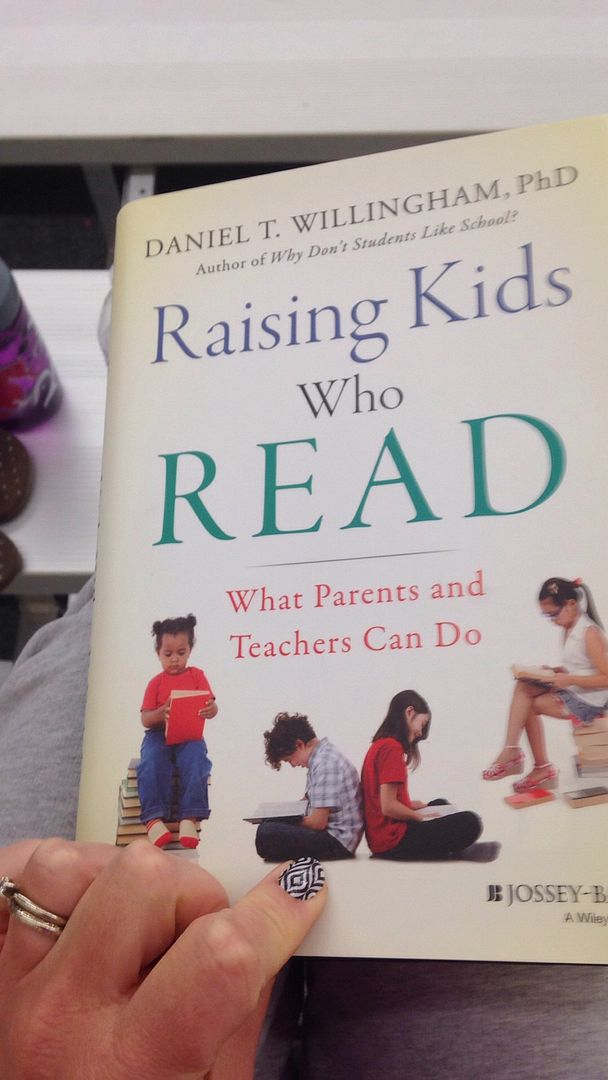
And a huge shout out to the book, Raising Kids Who Read by Daniel T. Willingham, PhD, for the inspiration for this post!


1