Happy Monday readers! It's Carla here from
Comprehension Connection, and today I'd like to chat about
Reading in the Wild by Donalyn Miller. Several within our group of bloggers have read her books, and as you can probably guess, we loved them both! I will highlight what I've taken from the book, but by all means, if you haven't read it, please put it on your list of must reads after
The Book Whisperer. If you'd like to check out the review of
The Book Whisperer, you can access Lauren's blog post from February
{here}. So just what does a wild reader look like in the classroom?

Donalyn introduces the book with discussion about how important it is to give students to time read during the school day. Many teachers assign 20-30 minutes a day of nightly reading as part of homework, but she contends that we need to find time in the school day to hook the kids and help them recognize times when they can get their books out. She uses a workshop approach to teaching reading and writing. She offers mini lessons using mentor texts, anchor charts, graphic organizers, and materials common with most classroom reading instruction, and during the application of comprehension strategies, she pulls in independent reading and discussion. It is through reader notebooks that her students reflect on their reading and practice using the skills taught. She advises making use of time "on the fringes" When might that be? Here's a short list of times I came up with, and I'm sure you can add to the list.
- When kids are waiting for Library checkout, PE, or Music.
- During transition minutes between classes if you're departmentalized.
- After work is completed.
- While waiting for the bus at the end of the day
- Before, during, and after lunch and recess.
- As students are arriving to school (This is a great way to de-stress and prepare for the day.)
- During guided reading rotations
Important point...You must always be prepared for a
reading emergency, and we need to help our students recognize the importance of carrying a book everywhere in order for them to open it and read. To create wild readers, we each need to look at our day and find places where we can give 5-10 minutes blocks of time toward independent reading.

Knowing your students' Lexile or guided reading levels has been ingrained in our heads over the past few years, and Donalyn advises that we not adhere exclusively to this. Rather, we should consider interest and motivation when recommending books to students. We need to be familiar with what our students are reading and know books well enough to offer options based on our students' interests. We need to remind our students that it's okay to abandon books when they aren't a good match and let book selection develop naturally. When students make bad choices, they find the book doesn't hold their interest and eventually they'll abandon the book on their own, but if they are persistent in reading it because they are motivated, we certainly want to encourage them to push on.
Donalyn urges teachers to read to their students high interest books that may lead to other reading options either by genre, theme, or by the same author. Important point-To become familiar with what your students may enjoy, use websites such as
Goodreads.com, make lists of books recommended by your students, and consult your colleagues and librarian for ideas.
One characteristic of young adult readers is that they enjoy talking about their reading, and through these conversations, comprehension improves. In Donalyn's classroom, students keep
(this star chart) and refer to it when they're giving book commercials or sharing with friends. She also has her students read from all genre types in the 40 book challenge.
This form from Becca at
Simply 2nd Resources would work well for students to track their reading genres.

Another routine Donalyn has implements in her classroom is conferring with students. She uses this time to take a running record, discuss the book with the students, assist them in planning for future reading, check reader notebooks, and to assess application of comprehension strategies. At the reading conference I attended recently, Donalyn shared that she found herself feeling frustrated that she wasn't conferring weekly with her students. She advised starting with the top of your class list and working your way down before starting over. She has been able to meet with each student three times per grading period this way. She uses
Evernote to keep her conference records which allow audio of the child reading, but I haven't had a chance to check that out yet. She mentioned the usefulness of being able to readily access the information for child study meetings or parent teacher conferences. This form (questions created by Regie Routman) can also be used to guide your conferring sessions as well.
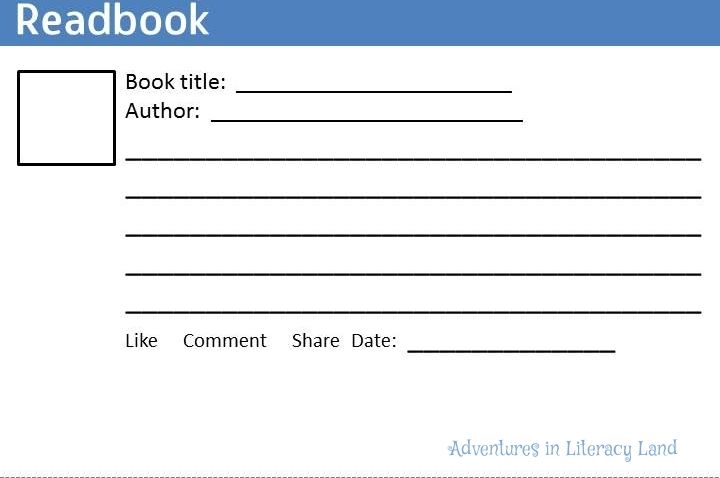
Finally, students need to time to talk about their reading with each other. This builds excitement and can also be used by the teacher for grading purposes. Donalyn has time set aside each Friday for reading commercials. Students are asked to prepare reading commercials at the end of their reading and present them to the class. These are brief talks. She discourages the use of lengthy book reports that bog students down and may keep them from reading. One idea that Donalyn shared at the conference was to dedicate a bulletin board space to book recommendations. In Andrea's
post about motivating struggling readers, she shared
this form you could use for students to recommend books to each other. Donalyn used index cards...no frills, but when the same book pops up on the board multiple times, students infer that it's a must read.

As previously mentioned, helping students plan for future reading is an important step in the conferring process. Students should keep a list of what they've read to feel a sense of accomplishment, but they also need a list of what they plan to read in the future. This expedites the book selection process at library checkout and helps avoid wandering from shelf to shelf the whole period too. Students have their lists together and can quickly pull together what they're wanting to read and get on with reading. These plans develop from conversations between students and from the teacher, and like the students, we need to have our list together too. Donalyn keeps a list of books her students recommend to her, and she reads them. In our busy lives, we may not read cover to cover, but it is meaningful to students to see that we listen to them and can talk to them about the books later.

What about the dormant reader? You know...the child who abandons book after book and often fake reads? One way to entice him/her is through the sharing of a new book picked especially for him/her that matches his/her interests. Giving students a survey at the start of the year may help you in knowing your students' interests and reading tastes. Donalyn mentioned that she often uses part of the conferring time to visit her classroom library with the child to find a stack to pick from. If you haven't done an interest inventory, you could use {
Donalyn's}. There are many inventories available online, or I also like this one from Joanne Miller at
Head Over Heels for Teaching.
Finally, since I mentioned the classroom library, I'll take a minute to talk about them. Even if your school has a well stocked library, it is very important that students have access to an attractive and well organized classroom library. Even if your classroom is small, dedicating space for a cozy reading nook sends the message to your students that you see this as an important component in your instructional routine. Make the reading area inviting and organize books in a way that students can see them easily. If maintaining the library is a challenge, put a responsible student in charge of taking in and putting away the books. You might put together baskets of your recommendations and put on display seasonal books, books that fit a theme your studying, or books from various genres.

As the year progresses, you will see that your students have reading preferences. Their star charts will contain more books from a certain genre for sure, and reader bonds will form between students who gravitate toward the same reading preferences. This is a sign that you've created wild readers. By showing students various genres, we are taking them to the reading buffet. They may do a taste test only for some genres, or they may discover they have a new favorite food to devour. The key is for us to show them the buffet and help them develop their tastes.

Finally, I'll end with this question. Are you reading in the wild? We, as professionals, should keep up with our practice. We need to read professional books in order to keep ourselves abreast of current research. We also need to read for pleasure. We, like our students, need to read on the fringes and keep a book on hand for those reading emergencies. We need to talk about our reading with colleagues and friends. Aside from these two books, I'd also recommend a few professional books that I have either read or plan to read. Several of us are participating in a book discussion through our blogs for Teach Like a Pirate this summer, and we'll share more details about that later. Others I'd recommend...
- Comprehension Connections and Genre Connections by Tanny McGregor
- Teach Like a Pirate by David Burgess
- Falling in Love with Close Reading by Chris Lehman
- Strategies that Work! by Stephanie Harvey and Anne Goudvis
- Daily Five and The Cafe Book by Gail Boushey and Joan Moser
What professional books have inspired you? In the comments below, please give your book recommendations. You may share a professional book, favorite novel, or books you enjoy sharing with your students. If you'd like to encourage your students to write their own book reviews or would like to contribute a review of your favorite books, Donalyn has begun
The Nerdy Book Club as a place for book recommendations. You can also read her blog at
[this link].
Now...go out and find a great book!



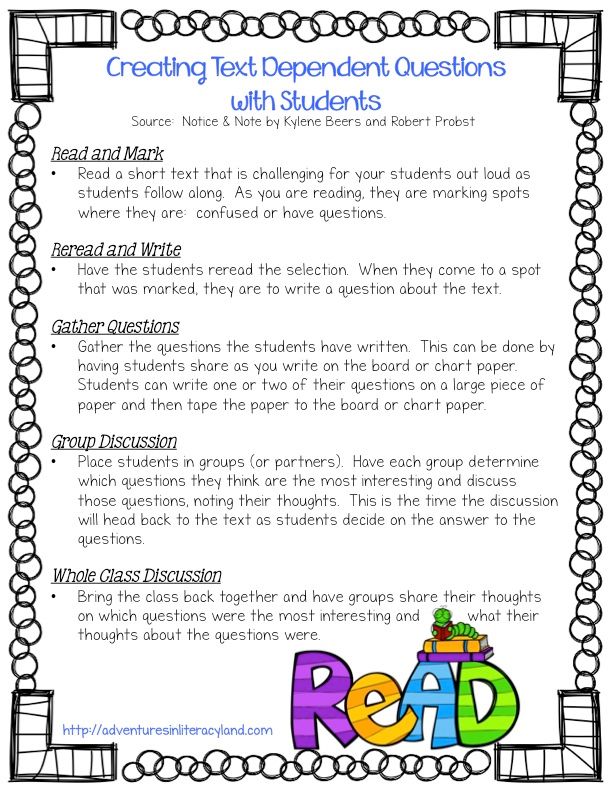 I don't want my students to become dependent on me. I want them to be independent readers. Questions they create on their own are more engaging and authentic than any question I could ever write. Students are trained that there is 'a right answer' when the teacher asks a question. If I am the only one creating the questions, they will never fully engage in the text.