Literacy Land: Thematic Teaching

Showing posts with label Thematic Teaching. Show all posts

Surf, Sand, and Fun for the End of the Year

Saturday, May 21, 2016

Summer is not far off, and that means you are likely packing up your classroom and winding things down. Your mind is on vacation, and guess what. Your students' minds are on it too, so why not embrace it? Let's take an ocean themed classroom adventure with a staycation right in your classroom. 
Summer is not far off, and to help you enjoy these last few weeks with your students, how about an Ocean Themed Adventure! Check out this post for ocean themed ideas, activities, and a freebie.


Best Books with an Ocean Theme
Of all the books I chose to feature in today's post, there are a few that I truly just love.  The first, Hello Ocean, has to be one of the most descriptive books available. If you are teaching figurative language, put this one on the list. The illustrations are just so real looking and help young readers who haven't been to the ocean actually feel like they have been. Pam Munoz Ryan selects just the right words to eloquently describe aspects of the ocean.

Riptide by Francis Weller is another favorite of mine. I am a dog lover, and our first dog was a Golden Retriever that looked just like Riptide. Caution though...this one has a really intense part. It is a true story, and your students will be on the edge of their seats with it. The reading level of it is mid third, and I used it in conjunction with a writing prompt focused on voice. The plot is very engaging, so if you're working on cause/effect relationships or plot development, this is a great choice.

Have you read the Scaredy Squirrel books? Scaredy Squirrel at the Beach is one of the cutest books. It would be a lot of fun for students to write their own Scaredy Squirrel stories or make a safety list for him or for other beach travelers. It is written with lots of voice/thought bubbles, so you might also follow that format with a cartoon strip. 
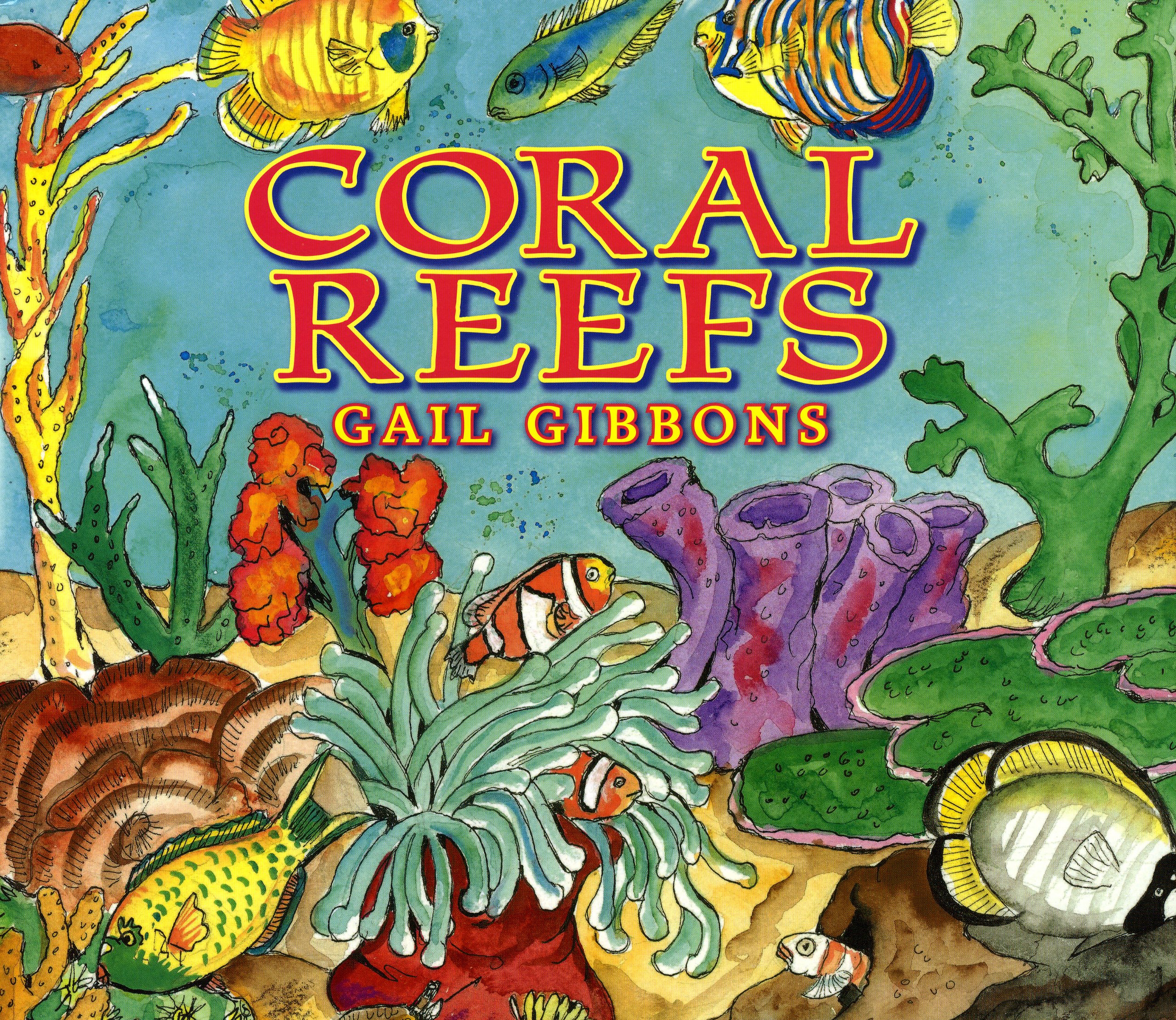
The final book favorite is a nonfiction book called Exploring the Deep Dark Sea and Coral Reefs by Gail Gibbons. Her books have all of the important concepts included, but she writes with word choices that are accessible by most readers in the upper elementary grades. I really enjoyed using these with my students to work on nonfiction text features and research. The reading level is about a third to fourth grade level too, and they hit many of the ocean concepts included in the fifth grade science pacing guide.  
Fun Activities to Check Out
Oh goodness, the activities are plentiful for an ocean theme. You can easily fill several weeks with writing extensions, science experiences and oodles of crafts. I found so many great activities on Pinterest, and this board will be growing. Whether you're ending the school year with an ocean theme, using it during summer school, or at the beginning of the year, you have lots of options to choose from. 
Of the pins I added, I certainly have a few favorites. I just love watercolor artwork, and the two I pinned would be easy to make. My daughter made a few like these in an art camp one summer, and I still have them framed in her bathroom.

Along with art projects, there are many different science experiments you might try.  The Ocean in a Bottle experiment was pinned quite a bit with different versions, and for our standards, creating a map of the ocean floor may make the terms a little easier to understand. I also love the paint swatch and flipbooks for showing how light travels through the ocean and impacts plant and animal life.

Finally, there are many writing options as well.  The one I loved most came from 2nd Grade Shenanigans. I bet her kids loved the final products, and I am sure their parents kept them as a keepsake. Too fun!
Best Websites for Ocean Exploration
Take a virtual field trip to the beach with this website. Walk through all aspects of the ocean and learn lots of science concepts too.  

Wow, this website would have been a tremendous asset a few months ago when I was working on oceanography with our fifth graders.  Students can travel to the ocean floor to discover what is there and what the environment is like.  Cool!


This last website is sponsored by PBS, so you know the footage and quality will be top notch.  The Odyssey travels to the ocean floor with an underwater camera mounted on it.  Again, students can get a true feel of what it's like on the ocean floor.

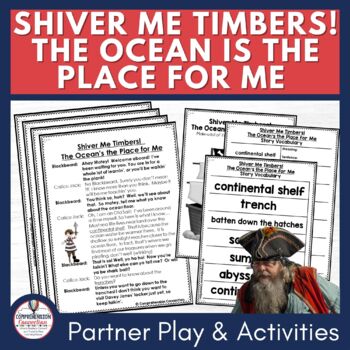
Before I sign off, I will share the links to a few of my Ocean themed resources.  I will also share one of my ocean themed poems you can use to work on fluency with your students during your ocean themed staycation.
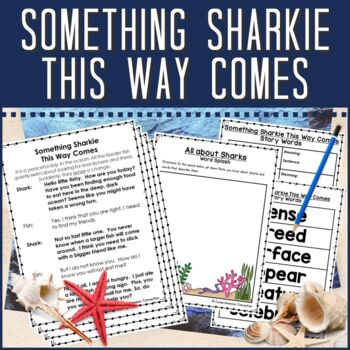
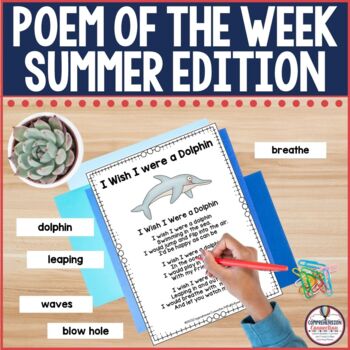
Partner Script:  Sharks and Oceanography  Poetry for Your Pockets Summer and Fall Edition     Shiver Me Timbers! The Ocean's the Life for Me Partner Script     

Ocean Fun Freebie
This ocean themed freebie will help your students with fluency, visualizing, and phonics. Stop by to check it out and all of the other ocean themed ideas.
Now, don't forget to download your copy of the [Ocean Fun freebie]. Have a wonderful Memorial holiday next weekend, and just think...only a short time til Summer!!!


0

Thematic Teaching With an Interdisciplinary Twist

Tuesday, January 19, 2016


Two years ago, I graciously accepted an offer to contribute to Adventures in Literacy Land, and I have been blessed because of it! Not only have I learned so much from my creative and talented co-authors, but I have made friends that offer support and encouragement. One of the greatest things about connecting on-line with other teachers and working collaboratively to support and share our passion for literacy is that we all bring something different to the literacy "table". 


As we celebrate our 2nd birthday (WOOT!), we also celebrate Lit Land's authors- new and old. We celebrate our diversity of backgrounds that allows us to grow professionally from one another and from interaction with YOU, our loyal and royal readers!

This month we are sharing our area of "expertise". As a passionate literacy educator and coach, I have many areas of interest. One constant that has spanned my career of working with students and teachers in pre-k through grade 12, as a classroom teacher to reading specialist to literacy coach, has been instructional planning, specifically thematic teaching.  I have written curriculum and planned with vertical and horizontal building teams as well as written curriculum at the district level. One of the things that I loved the most as a literacy coach was the opportunity to work 1:1 with teachers to plan and write lessons that integrated literacy as well as those that were interdisciplinary in nature.

My teaching style reflects the way my brain works when planning: I think holistically in terms of themes. I always start with the question of "What interests do my students have?", "What would they enjoy learning about?" and "How would they best learn and study this theme?" There is much research to support that thematic teaching is an efficient and effective model for both students and for teachers.


Advantages of Thematic Teaching
There are many advantages, but here are my top three:
  • Increases students' interests~ engaging
  • Helps students to make and understand connections among content areas
  • Compacts curriculum and makes efficient use of time


Depending on your position and school district, you may have more of a dictated curriculum and perhaps even mandated lesson plans. I've worked in schools like those too, yet I have also had the complete opposite where I had (almost) complete freedom, as I was writing my own curriculum whether it be for the classroom or for student intervention purposes. 

Currently, I am homeschooling my youngest child who is in the 3rd grade.  I want to share with you a little about how I plan a thematic unit in the hopes that it will inspire you and give you ideas to use with your own students.

We are at the end of a snow unit. I try to be as student-centered as possible, capitalizing on students' interests and what I call "wonders" (i.e., things they are curious about).  Up until this week, we had not had even one flake of snow. Both my boys were lamenting this fact when I had a last-minute idea!  How about a mini-snow unit?  

Questions to Consider When Planning:

How do I start planning a thematic unit?
I don't think there is a right or wrong way to plan a thematic unit. You might begin with a big picture question (e.g. How is snow made?). Or, you may select a topic/theme that you know will motivate your learners.  Some districts and schools still use basals and anthologies.  Many of these books are arranged by theme and you may get an idea that sparks your interest.

What things do I include?
To determine this, I consider how much time I have to spend on the theme and what resources I have.  For my snow unit, I knew I wanted to integrate science (how snowflakes are formed and how snow is different from other forms of frozen precipitation) with reading and writing.


Purpose: Why am I doing this?
This is where differentiation and individualized learning probably comes in.  For some classes (and for my son) that I have taught, sometimes I selected a theme because I knew it would motivate and inspire them if they needed a "pick-me-up"


How much time do I have?
I actually find that I save time when I teach thematically. Content areas such as social studies and science are merged with ELA and sometimes math.


What are the curricular standards/objectives expectations?
To compact curriculum, think about whether you can meet a science or social studies objective during ELA time. I often use our social studies text during our reading block, which merges two curricular areas and maximizes our time.


Other Considerations

Interdisciplinary Connections
With so much to cover in English language arts and math along with other expectations, it can be difficult to cover content areas such as social studies and science. Integrating other content areas into your thematic unit can "kill two birds with one stone"~ save you time by making efficient use of your time. Plus, this is so effective in teaching students how to make connections among contents and is an authentic application of math and ELA knowledge and strategies. Of course, it all depends on what your scope and sequence looks like in the content areas and how much flexibility you have.

Integrate genre- go beyond paired texts
In my snow unit, I included fiction (short story and poetry), a biography (Snowflake Bentley), reading from the science text, a science/STEM experiment, and an informative PowerPoint.

Integrate the "arts" and "specials"- music, art, P.E., etc
My son loves art, especially art and music. We made our own snow, made "shivery snow paint", and created a snow globe topper for informative writing. Plus, it was also a fun surprise that part of his piano practice for this week include some winter themed songs!


Highlights From Our Snow Unit
Science and informative writing 


Snowman Shape book from Creative Clips


Snow globe writing!


Snow paint!


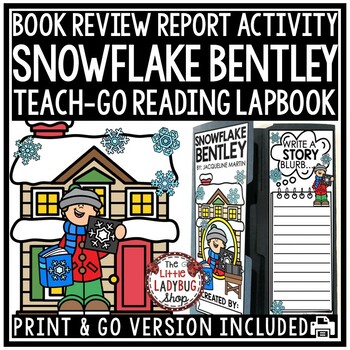
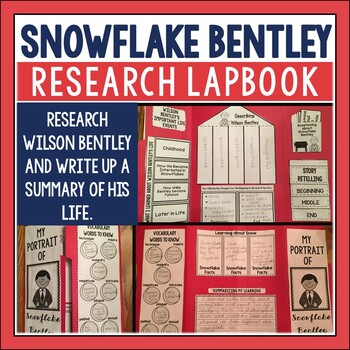
After reading Snowflake Bentley, he worked on a lap book to synthesize and showcase his learning.  I used resources from these two fabulous teacher-authors for the lap book:


Snowflake BentleySnowflake Bentley Lapbook


Of course, there is a whole lot more that goes into planning a thematic unit, such as assessment and reflection. I hope you were able to gather some new ideas for your thematic planning that integrates the content areas.

You can read more details about my snow unit (including lots of FREEBIES!) over on my blog.  Just click the picture below!


Enjoy!


0

Why Thematic Teaching Just Makes Sense

Wednesday, November 4, 2015

No matter what stage you are in your teaching life, you probably would agree that making connections across your learning improves retention of content. Children, especially struggling students, need extra exposure to the challenging content presented in science and social studies, and when students are reading about, writing about, working with, and creating about the content topics, most keep the information long term. 

Last year, I was given the flexibility to select the materials I used with my students, and I decided that I'd focus on the content areas as I planned my lessons (like the old days). The difference between the "old days" and the present though was in how I worked with the content. I used a variety of materials including informational articles, reader's theater, picture books, chapter books, and poetry...all on the similar topics to build a theme, and with all of these, we used interactive notebooks, close reading, anchor charts, written responses, and graphic organizers. Teaching students to think deeply is the core to each and every part of the ELA block, and since I taught just the ELA block, it was really important to know the standards taught during the remainder of the day in order to keep with the theme.

So...what are the advantages?
I did a little digging, and after reading a few articles, this is a cumulative list from the reading. 

With thematic teaching we get these positive results...
  • Connected learning...It helps students understand connections and how to connect
  • Focuses the class on a deeper understanding of the content.
  • Extends topics beyond surface learning.
  • Allows more variety with teaching methods
  • Helps students experience many different ways of learning.
  • Keeps students engaged through making learning activities fun/variety
  • Teacher is able to be creative, authentic, and original (as well as the students)
  • Allows the teacher multiple ways to assess learning
  • Teachers can integrate all subjects and use literacy within those subjects which increases the amount of reading students complete.
  • Utilizes collaborative and cooperative learning and works well with Project Based Learning and Genius Hour
  • Students share the same learning goals and all are given the feeling of importance.
  • Creates a community of learners
  • Technology in the classroom is very important to dig deeply into the theme.
  • Compacts the curriculum
  • Time savers- teaching multiple subjects at one time
  • Students apply their learning in real world experiences.
With that long list, are there disadvantages?
Although the list of advantages is long, there are a few disadvantages to consider. After all, we must look at the needs of each and every child in our classroom and recognize that not everyone learns exactly the same way. Differentiating our teaching is required within the thematic framework if it isn't working for some of your students.
For some, interest in the topic may not be a match, and when it's not a match, motivation will dwindle.
  • Students could become bored with one theme
  • Students might show low motivation or a lack of interest interest
With the curriculum, one of the most important reasons to teach thematically is for students to make connections across the curriculum, but if they are absent, they might struggle with making those connections. Other curriculum issues includes...
  • Finding appropriate resources and enough resources to prepare students appropriately can be an issue, especially if other teachers are teaching the same content.
  • Also, some standards may not work into the themes chosen causing missed content.
  • Teacher planning and prep time may be increased due to gathering materials and creating materials to fill curriculum gaps.
Interested in trying a theme? 
Each week on my blog, Comprehension Connection, I host a link up called Thematic Thursday where I pull together resources on a specific topic. Some may work well for your standards and some may not, but even if you do not teach with a full theme across all subjects, you might enjoy using a collection of themed resources to accompany your school's curriculum, a basal story, or just to increase motivation with a topic your students love. This week, the theme is...Wild West. I hope you'll stop by, check out the resources I've pulled together, and maybe link up some of your favorites (free only please) or even websites you've enjoyed.


Thanks so much for dropping in today. If you have suggestions for themes I should add to the schedule, by all means, let me know in the comments, and until next month...happy reading!

0