Scrunched up eyebrows, running hands through hair, grunting and groaning, and comments like, "Do we have to do this today?" or "How much longer do we have?" are just a few signs of frustration. Have you seen these before? I don't know a teacher who hasn't, but what do you do about it? If you teach reading (and that includes content area reading), then these signs are the signal an intervention may be needed. Is it okay to let kids struggle a little? The answer is yes, but using these signs as a cue that we may need to reexplain material is important too.
Two years ago, I began blogging with Lit Land, and the beauty of this blog is that each of us has a passion for literacy education and are using this platform to share ideas with you, our reader, with the hope that maybe something we share provides you with a way to reach and teach your kiddos. For this month, we're each sharing our interests and specialties. I have been thinking about this for at least a week, and I honestly could not pin down just one "area of expertise" because I honestly just love teaching all literacy skills. As I've been reflecting though, I decided that for me, it's all about the child. I watch, look at the data, think about our learning targets and where the kids need to be by the end of the year, and use the child's strengths to attack the deficits. Here's a little info about me so you know where I'm coming from. My experience has been in the classroom (10 years in first, fourth, and fifth grades), 14 years as reading teacher and reading specialist, and 1 year as a technology specialist), so I've had practice with kid watching. :-)

Kids develop reading skills in stages, but the pace differs from child to child. If you observe students at different grade levels, you'll see how the focus shifts and range from the lowest to the highest performing students broadens. Last month, I talked to you about the think aloud process, and I shared this image in the post. It shows how the focus shifts as our students master skills. This doesn't mean you work only on word work and so on, but rather the literacy diet changes as our readers grow stronger as readers.

Although I hate to see to see students struggle, I do think that the signs are necessary to know whether our instruction is Too Easy, Too Hard, or Just Right. Keeping the Goldie Locks Principle in mind applies to so many elements of teaching, and when we are at the Just Right level, students are working at the optimal level for progress.
When I wrote about this topic in our first year, I shared this great anchor chart, so I thought I'd include it again in case you missed that post. I love Karen's explanation of what reading of each type of book looks like for the student. Selecting appropriate reading material is a difficult thing to do for many students and honestly for some teachers. We have to know books well to make appropriate recommendations to kids. Sometimes, we don't make a great match and kids will naturally just put the book down. If it's too easy, they'll fly through it (and practice fluency). If it's too hard, they'll lose interest (or push on with lower comprehension). This happens occasionally, and that's not a huge problem if most material hits the child's "Just Right" level.
As I use different materials with students, one important instructional component is what's observed with kids. I work hard at being attentive to the signs below and record them in my notes as I listen to my kids read (and you must do this one-on-one as all of your kids are reading on their own (whisper reading or silently reading) or on running record forms. Kid watching, taking notes, and monitoring error types help you identify skill weaknesses. Below are the behaviors that I make note of when I am testing, listening to my students, or discussing with them:
- Pointing-At some reading stages, pointing is recommended, but once the student reaches the transitional reader stage, the tracking of print happens with the eyes only. Pointing is a sign for the upper grades that the level of the text is pushing them a bit too much.
- Head Movement-Watch if the child moves his/her head left and right as he/she reads. You can mention and work on this in later lessons, but students do this rather than tracking with eyes.
- Rubbing eyes, hair, or clothing- These are frustration or anxiety signs that the material may be too hard or a sign of fatigue. Reading is hard work, and when children tire, it may be time for a break. Continued body language such as this is a sign the materials too high in level.
- Pleading for Help-I see this normally when I'm checking comprehension. The child looks around the room as if the answer will fall off the wall. (again...frustration sign)
- Fidgeting in Chair-May be sign of fatigue or distraction, but can also be a sign that the child is hitting frustration.
- "Are we done yet?"..."How much longer?"-These questions are an indication that the child is done. Bring things to closure at this point.
- Frequent Rereading-This is important to note because of the impact on fluency and comprehension. If a child returns back repeatedly to get a running start, they lose meaning.
 |
| Click to Download |
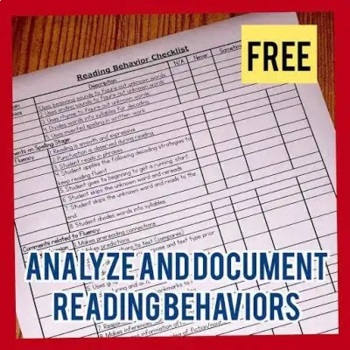
In addition to these frustration signs during oral reading and assessments, I also keep tabs on my students behaviors related to strategies. I like the indicators on this checklist and find the form helpful to use as I talk with parents. You may find it helpful too.
I appreciate you visiting today, and I hope these ideas help you recognize the hidden messages our students show with their behaviors. They may not be disrupting, acting out, and avoiding for nothing. They may be trying to give you the sign that they need a little help with the material.
Have a happy day and see ya next month!

Have a happy day and see ya next month!