Literacy Land: summer reading

Showing posts with label summer reading. Show all posts

Six Summer Reading Tips

Monday, June 20, 2016
Six summer reading tips for Kindergarten graduates. Follow these six simple summer reading tips to inspire little readers to read during the summer months. By Jonelle Bell/A Place Called KindergartenBy the end of the school year Kindergarteners have started to figure out how to read for themselves. They are voracious learners that are thinking of themselves as readers. How can you keep them reading when they go from this reading environment...
Six summer reading tips for Kindergarten graduates. Follow these six simple summer reading tips to inspire little readers to read during the summer months. By Jonelle Bell/A Place Called Kindergarten
to this summer environment...
Six summer reading tips for Kindergarten graduates. Follow these six simple summer reading tips to inspire little readers to read during the summer months. By Jonelle Bell/A Place Called Kindergarten
Children who read during the summer gain reading skills. Create a summer full of reading with these 
six summer reading tips. 
Six summer reading tips for Kindergarten graduates. Follow these six simple summer reading tips to inspire little readers to read during the summer months. By Jonelle Bell/A Place Called Kindergarten
Go on Book Trips
Visit your local library or book store often during the summer. Make sure that young readers have their own library card and consider getting them a special book bag. Investigate summer reading programs at your local library and book stores. Sign up for a summer reading program. 
Scholastic Summer Reading Program
Barnes & Noble Summer Reading Program
Half Price Books Summer Reading Program
Be a Reader
If kids see adults reading they will understand the importance of reading. My  8th grade son and I still love to read side by side, especially during the summer. This summer I have been reading in these fun pajama pants.
Six summer reading tips for Kindergarten graduates. Follow these six simple summer reading tips to inspire little readers to read during the summer months. By Jonelle Bell/A Place Called Kindergarten
Schedule Time to Read
Swimming, camps, sports events, vacations and many other activities are fun things to do during the summer. It is important to help young readers fit reading into their busy summer schedule.  
Environment Full of Books
Make sure that early readers have a variety of reading materials on hand. They need their own copies of stories that they love along with a combination of informational text and storybooks or early chapter books. Subscribe to a children's magazine to give little readers something to look forward 
to reading every month. 
Read Together
Summer is a great time to read a chapter book to your little reader or practice your storytelling skills. Improvise with different character voices to 
make stories come alive. 
Be a Rainy Day Reader
The best thing to do on a rainy day is to read a book. Make a list of rainy day books so that you are ready when the clouds roll in. 
Happy Summer Reading!


1

Summer Reading Programs

Sunday, May 15, 2016
Check out these free summer reading programs from local retailers to keep your students engaged with books all summer long!
Each spring, I usually post the summer reading programs offered by local retailers on my blog (Literacy Spark).  I decided to share them over here for Adventures in Literacy Land readers this time.  I like to print the actual calendars for students and put them in a folder that I give them on the last day of school with their report card and other things.

First, make sure to check with your local public libraries and see what programs they will be offering for kids throughout the summer.  Often, the librarians will be willing to come into the school and speak to students before summer starts. Many libraries hold summer reading challenges as well as special events and story times.
Check out these free summer reading programs from local retailers to keep your students engaged with books all summer long!
Check out these free summer reading programs from local retailers to keep your students engaged with books all summer long!Check out these free summer reading programs from local retailers to keep your students engaged with books all summer long!
Barnes and Noble is having its usual summer reading program which rewards students with a free book upon completion of a simple reading journal.  Stores will be holding opening ceremony events on June 4th.  Find more information here.
Check out these free summer reading programs from local retailers to keep your students engaged with books all summer long!

Check out these free summer reading programs from local retailers to keep your students engaged with books all summer long!
Chuck E. Cheese has a bunch of reward calendars on its website available for use any time of the year.  One of them is for reading.  Kids can bring in a completed reading calendar and get ten free tokens.  Calendars are available here.

Check out these free summer reading programs from local retailers to keep your students engaged with books all summer long!Check out these free summer reading programs from local retailers to keep your students engaged with books all summer long!
Half Price books is offering a $5 gift card with the completion of a reading calendar for the months of June and/or July.  The calendar can be found here.
Check out these free summer reading programs from local retailers to keep your students engaged with books all summer long!
Kids that read ten books can get $10 added to their TD Bank account. More information can be found here.
Check out these free summer reading programs from local retailers to keep your students engaged with books all summer long!
Scholastic is also hosting its summer reading challenge.  Schools, teachers, and/or parents can sign their children up to record the number of minutes read over the summer.  There are a lot of resources on the site that are great including rewards and things of that nature, but my favorite are the book lists by ages.  These would be great to send home with your students.  They can be really helpful for parents who aren't sure what their kids should be reading. The resources from Scholastic can be found here.

Sadly, I feel like I find fewer and fewer programs each year!  So if you know of any others, please leave a comment and I'd be happy to add them to this list.
Check out these free summer reading programs from local retailers to keep your students engaged with books all summer long!


0

Summer Reading: Chapter 7

Sunday, August 2, 2015

Richard Allington and Anne McGill-Frazen end our Summer Reading book study with a chapter that sums up their findings from the different studies that were shared throughout the book.  So I wanted to take a moment to review some of the important points that I gleamed from this book:

First of all, I think it was made very clear that the amount of voluntary summer reading that occurs by students from different socio-economic levels is the biggest factor to the achievement gap that we see in our schools. It was also noted that books are just not as available to kids in low income families when compared to middle class families.  I work in a low socio-economic school and it is true.  My kids repeatedly tell me..."I don't have books at home."  So I work hard to get as many books in their hands as I can.  What actually occurs in the homes of my students is out of my control, but what can I DO that positively impacts the practices in the home?

This leads me to the next part of this chapter: the ideas.  Allington and McGill-Frazen summarize some of the positive practices that were shared throughout the book but they inserted a few more.  I appreciated this because it got my brain thinking about what I could actually DO to impact some change.  Here are a few of my favorite ideas:
*send books home over the summer
* open the school library 1 day a week
* students call in and read to the school voicemail
* meeting students at the local library to discuss books

I actually read part of this book as the year was wrapping up in May.  When I read about how 15 books were given to each student by self-selection, I decided to try it out.  

Here's what I did: 
I filled my guided reading table with books at a specific DRA range.  Called groups of students over and handed them a bag.  

 
 Each student filled their bag with 15 books that looked interesting to them.  I repeated this process with the different DRA ranges.  By the end, every first grader had a summer book bag filled with 15 books that they chose.  There was one problem: these were not as "high interest" as I would have liked, but it was the best I could do with a last minute decision.  I am excited to ask the students about their experiences with the summer book bags when school resumes.

The role of public libraries was also mentioned in this chapter but it was pointed out that they must read out to economically disadvantaged families because they are less likely to go to the library.  I have found this to be true.  The public library that my students visit does have a good reading program and offers many, many incentives for reading.  But I am not convinced that the students that need to go there and check out books actually are.  Then I read, "middle class children are more likely to be engaged in organized summer programs than children from low-income families."

What can I do to help change this?  Can I help to start new habits within my school families?

These questions led to another decision that was made this summer.  After a school-wide book study, it was decided that we would offer a "Readbox" twice a week at dismissal.  We are a walking school; therefore, our lot is filled with families at dismissal time.  This is a perfect opportunity to push reading at home and offer free books to be checked out.  If parents are not going to go to the library, we will bring a version of a library to them.

My teammates and I have collected a rolling bookshelf (to roll outside) that will be painted red, a banner, a stamp for the books, books (as high interest as possible--notice the Disney characters!), and the Book Retriever app to check the books in and out.
So every week this year, my teammate and I will stand outside encouraging families to rent books from our "Readbox."  My hope is that this will become routine for families.  If this becomes the case, I would like to continue the routine during the summer months.

Has this book led you to want to make any changes in your school this upcoming year?

We would love to hear about them!  Anytime someone shares an idea, it helps to stir more and more within the rest of us!! Thank you for reading along with us.  It has been a helpful, insightful, and worthwhile read.


2

Making Summer Reading Personal

Saturday, August 1, 2015

Hello Royal Readers! This week we are discussing the book Summer Reading by Richard Allington and Anne Mc-Gill-Frazen. Yesterday, Andrea shared how one principal took her summer reading program on the road. You can read that post {here}. Today, we'll focus on chapter six.

Making Summer Reading Personal and Local

This chapter takes an in-depth look at one district's personal and local approach to summer reading.

Summer reading loss has the potential to become a huge problem for children and school districts. Consider that a child can lose up to three months reading achievement each summer, which can accumulate to a gap of nearly 2 years by the end of sixth grade.  Wow, as a reading teacher I find that terrifying!


A Summer Books Program

One district rallied together to find a solution to the summer reading loss problem.  Principals, reading specialists, special education teachers, and building staffs studied Allington's work and developed a plan.  Here's what they did:

  • Created a student interest survey for students to complete. The first year of the program, they began with first grade, adding a grade each year until the program serviced first through fourth graders.
  • Developed a list of books to purchase based on the student interest survey.  
  • Negotiated the best prices with shipping included.
  • Purchased a large quantity of books (roughly 20 per student).
  • Invited student to "shop" for their summer books prior to the end of the school year. 
  • Challenged students to read 1000 minutes over the summer and document their minutes.
  • Provided incentives (treats, surprises, postcards, phone calls, and a hotline to hear a special message) to maintain motivation throughout the summer.  
  • Held a community event, a mid-summer reading reunion, to exchange books for fresh reading material.
  • Collected the books and calculated the minutes upon the start of the new school year.
  • Assessed students reading levels.

Funding

I'm sure you are wondering how much this program cost. It was expensive, but the district had the mindset of "pay now or pay later".

So how did they pay for it?  They raised the money by writing grants, enlisting the help of their PTO, and forming community partnerships.

Local businesses sponsored the mid-summer reading reunions. For example "Burgers and Books" was sponsored by Bob's Big Boy, and Outback Steakhouse sponsored the "Go Outback and Read BBQ and Book Exchange". Local newspapers promoted and covered the events.

Results

Nearly 80% of children who participated in the summer books program maintained or grew over the first summer.

The program has expanded over four years to serve grades 1-4. The current fourth graders, who received the books for three consecutive summers, have had the highest degree of success.

The success with special education population was especially impressive.

The program has become wildly popular. The whole community gets involved, parents are educated on the importance of summer reading, students look forward to receiving the large bag of books, and the mid-summer book exchange continues to grow each year.


Question for Discussion

What elements of this summer reading program could be used to improve the program at your school?  Share your thoughts in the comment section below.  

Stop back tomorrow as we conclude our Summer Reading book study with Chapter 7: Where Do We Go from Here?


0

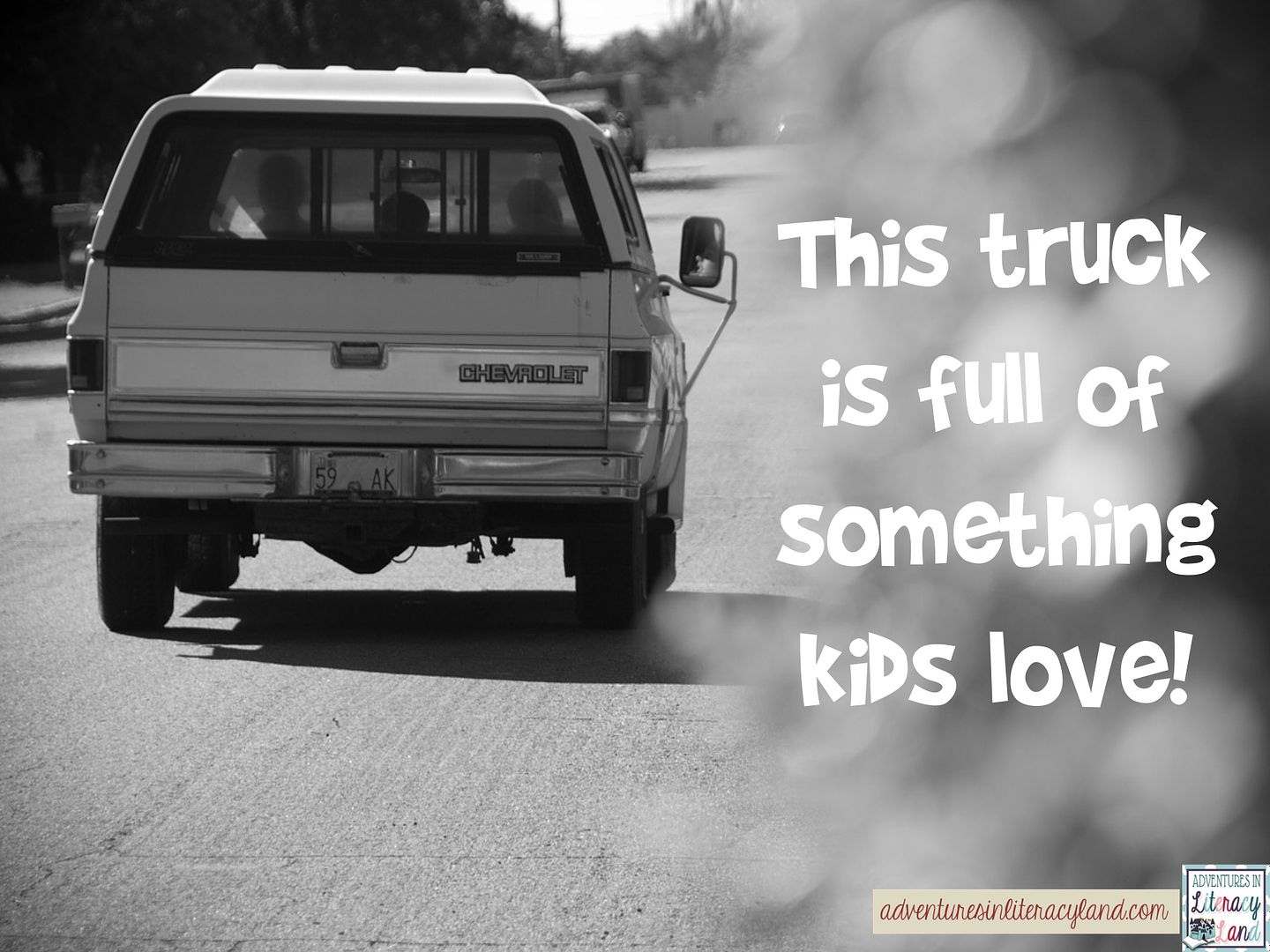
What's in the Truck? ~ A Different Approach to Summer Reading

Friday, July 31, 2015


Hello, everyone!  It's Andrea from Reading Toward the Stars again with some more insight into summer reading through the book Summer Reading by Richard Allington.


Imagine this scene:

It's a hot July day, and kids in rural areas are outside playing and enjoying some fun with family.  This old truck comes up the road and stops right in front of their house.

They come running to it with excitement!

The teacher gets out of the truck and begins talking to the children and adults at the house about the books they read the past week.  After the children return their books from the week before, they choose five new books they can and would like to read for the next week.

Smiles light up everyone's face during this visit!

This is exactly what one high poverty rural county in Florida has done for many summers.  Their teachers work together to ensure that students have access to appropriate reading material by driving the "bookmobile" into these rural areas.  Before the children choose new books, the teacher surveys them about what they read, liked, and didn't like.  Then the students choose 5 new books to read for the next week.

What were the findings?

1.  Students who participated full time (7-10 weeks) showed the most progress.

2.  Though it didn't increase fluency or sight word knowledge, it did affect the self-concept of each child probably because they were able to choose their own books at the appropriate level.

3.  Comprehension scores of full time participants saw gains.

4.  Though students did not achieve on grade level gains by the end of the summer, they still made gains, which eliminated the "summer slide".


Is this effective?

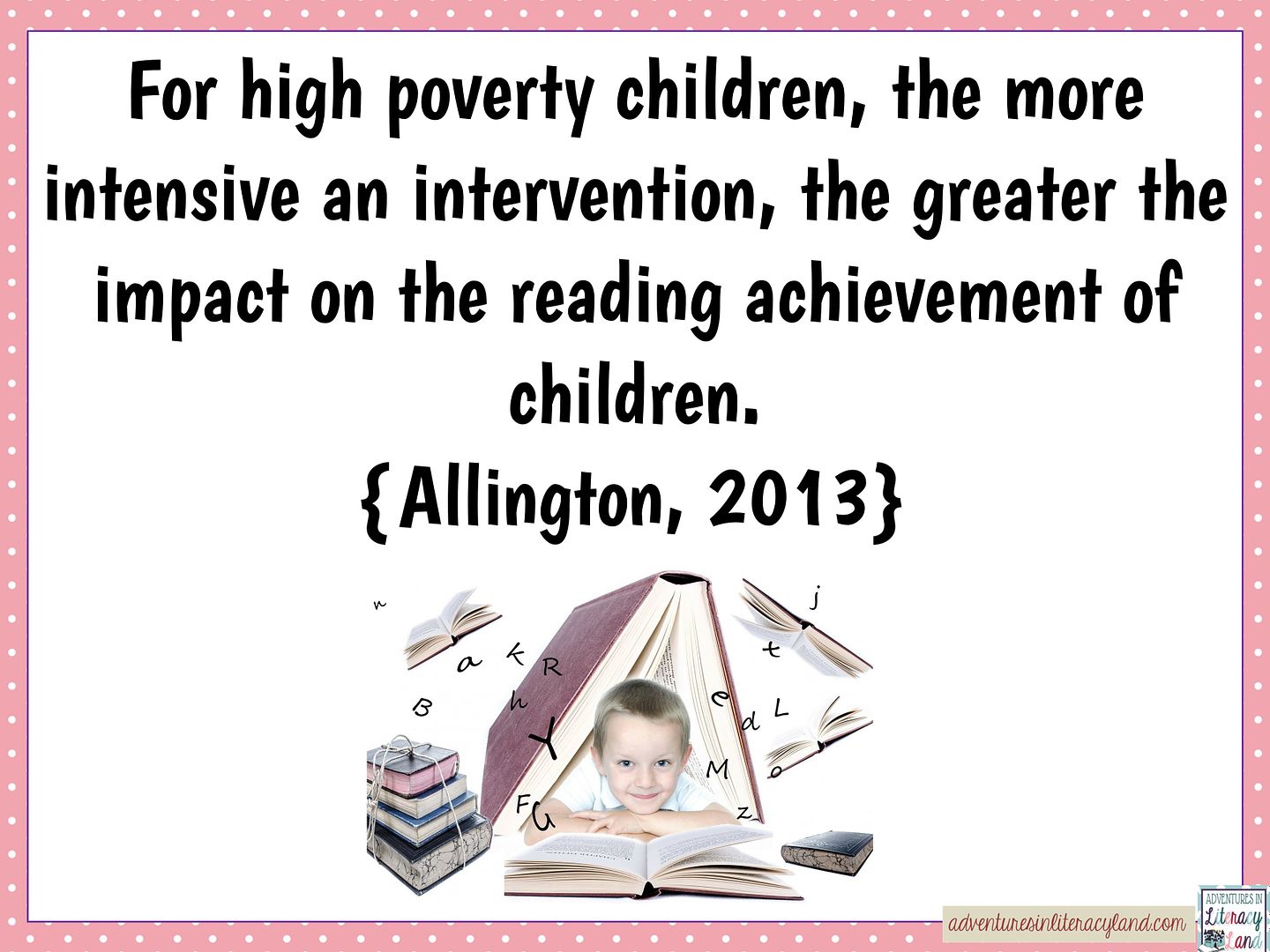
Yes, it is effective to some extent!  There were some gains with this model, but there needs to be more intensive interventions to make significant gains in students in poverty.

Where do we go from here?

The school that started the program has continued to have weekly book visits but have also incorporated a one-on-one tutoring intervention.  This has been extremely effective, both economically and for the students.

How might this model suit your school?

Would your colleagues share in helping you with a project like this?

Let us know what you think in the comments below.  And join us again tomorrow as we continue our book study of Summer Reading:  Closing the Rich/Poor Reading Achievement Gap by Richard Allington.


9