Literacy Land: book study

Showing posts with label book study. Show all posts

Reading Wellness: Alignment

Tuesday, July 26, 2016
Reading Wellness...Wow!!  Sarah from Simply Literacy and Em from Curious Firsties here today to discuss Chapter 3: Alignment.  We hope that you are enjoying this book as much as we are.  It has led us to some great conversations about our own students and what we can do a bit differently this year.  Below you will see a conversation that Sarah and Em had about the alignment chapter.

Alignment...
What does this mean to us?  Well in our own lives it means aligning our values with our day to day constraints.

I feel like alignment in my life is coinciding my school life and my home life.  My day starts and ends with my home life, all while my school life is intertwined. Aligning those two lives is an ongoing learning process and essentially a balancing act that I am still trying to figure out.

I know for me, alignment in my life is integrating and balancing my love for reading, blogging, teaching, and parenting.  It is easy for one to overpower another but I am always working to find that balance.

The authors, Burkins and Yaris, explain that the same alignment must occur for readers but through print and meaning.  Both must be attended to and in alignment.

I teach third grade and I tend to focus my teaching on meaning.  Of course with some students, I need to focus on both print and meaning.  When a student struggles with print, I tend to focus mostly on certain skills and leave meaning on the back burner.  I love how this chapter reminded me the importance of aligning print to meaning and meaning to print.  They go hand-in-hand, not separate.

Since I teach first grade, I find that I do tend to focus my teaching on the print.  Meaning is talked about and I always ask "does it make sense?" but I would not say that my teaching of print and meaning is in perfect alignment and harmony.  I could use some work on that.

The importance of print and meaning is comparable to a puzzle: the pieces versus the puzzle.  Which one is more important.  Both.  They are essential and important to the activity of putting a puzzle together.

I love this analogy.  You can't have one without the other.  And it makes me wonder if this would be a good analogy to help the kids understand the essential connection between print and meaning.

Whenever I read, I tend to comprehend better when I make connections to the text.  I love the puzzle and learning to dance example (pg71). These analogies immediately made me think of when I teach young girls how to fastpitch.  For years, I have taught several girls how to pitch and every time, girls immediately want to jump into full motion pitching before learning the basic drills.  This reminds me of aligning print with meaning.  Girls are not going to be able to throw strikes or throw with speed and accuracy if they don't align it with the proper techniques.  

The authors go on to explain that even the best readers make errors or misunderstand text but they have the alignment of print and meaning to resolve and cross check these errors.

True...I cross check constantly as I'm reading professional and personal books.  But this doesn't happen naturally and the kids cannot see exactly what is going on in my head.  It would be helpful if I did more think aloud modeling to help them see the connection and alignment.

I agree 100%, Emily.  I feel like with most things in life, modeling is an essential.  Integrating the language and ideas from this chapter during think-alouds will help readers to align print with meaning.

Burkins and Yaris say that by offering explicit strategies such as "get your mouth ready" or "look for a small word inside the big word," we are not allowing students to be decision makers or problem solvers.  They state that we are "...telling them how to solve a problem rather than supporting them in solving the problem themselves." (p71)

Typically I use specific prompts to help them use strategies:


Yikes!  I have been doing it all wrong!!!! When print and meaning aren't aligned, my teacher instinct has always been to prompt and help the reader to solve the problem.  My prompts, such as "look back at that word carefully", basically tells the student how to solve the problem rather than supporting them in solving the problem themselves. This part of the chapter was so informative and eye opening.  

Also, while reading this part of the chapter, a past student popped into my head.  I wish I would have read this chapter three years ago.  This past student's reading process was out of alignment.  He was constantly inserting a or the in front of words in a text, and other print cues. The miscues made sense on a sentence level, but his insertions were changing the meaning.  I was always saying "does that make sense?" which led  me to telling him how to solve the problem rather than supporting him in solving the problem himself.  

Oh geez!  This is totally me!  Being a first grade teacher I prompt a lot during guided reading.  But I noticed that later in the chapter the authors do say that some students still need this specific strategy prompts.  I want to reread and explore this.

In the lesson "Does It Match," the authors offer a lesson and extensions to support the alignment of print and meaning.

I love the way the lesson does really help the students to have more independence in their reading.

I particularly like the vocabulary and prompts that are suggested for guided reading, shared guided, and independent reading.

Agree completely!!  But it is stated that some traditional prompting may still be key for some students.  I can see this for a new reader--but overall I want to foster more independence.

Yes, my students spend a lot of time reading independently.  The chapter gave an easy example of what to say to your students during that crucial reading time.  As the students settle to read, simply say, "Raise your hand when you solve a problem.  I want to hear about how you solved it!" (pg. 85)  So easy and so powerful!

When checking for meaning, I like to use "S-T-P" with my students.  This is from Jan Richardson's The Next Step in Guided Reading.  My students hear "S-T-P" (which means Stop-Think-Paraphrase) a lot throughout the year.  While students are either reading during guided reading groups, with a partner, or independently reading, students will read a page, Stop and cover the text with their hand, Think about what was read, and Paraphrase by softly telling themselves what was read.  If students cannot retell the page that was read, then a reread must be done. I think when using S-T-P, students are practicing the constant back and forth of checking and cross checking which will hopefully help readers move along the continuum of proficiency in reading.

I can't wait to try out the lesson and discover the impact that it has on my students.  When reading this chapter, what stands out to you and your readers?


1

Motivating Students to Embrace Hard Work

Monday, July 25, 2016

How do we motivate students to embrace hard work?  This question pops up frequently in conversations among teachers. With the recent push to raise rigor in reading, teachers are wondering how to encourage students to persevere through complex text. 

Today we'll take a look at Chapter 2, "Posture", from Reading Wellness to find some possible answers.   

Ignite passion and instill confidence in your readers with Reading Wellness, a summer book study. Today's topic: mindset and hard work.
Reading Wellness by Jan Miller Burkins and Kim Yaris

Developing Posture 

Posture is the way in which students demonstrate a sense of empowerment about a task, according to Burkins and Yaris. 

How students do their work depends largely on how they feel about doing the work. 

Many times, students believe that they can't do something, and therefore they are unwilling to try. However, we can teach students to think differently about their work.  

Chapter 2 provides lessons to develop posture.

Leaning In/Leaning Out Lessons

Leaning In and Leaning Out is the metaphor used in this chapter to teach students that even when a task seems difficult, they can still tackle it. Students can Lean In, or embrace a task rather than Lean Out, or resist it.  


We can teach students that they have power over their learning.  We can teach them that their words, thoughts, and feelings impact their learning.  

We can use picture books to model and teach the Leaning In/ Leaning Out language.  Students can examine how characters lean into or away from a learning experience.  

We can model Leaning In through our own words and actions in the classroom.

Reading Wellness Intentions

Here's a look at the connection between Posture and the four Reading Wellness Intentions.

 Ignite passion and instill confidence in your readers with Reading Wellness, a summer book study. Today's topic: mindset and hard work.


Pin for later:
Ignite passion and instill confidence in your readers with Reading Wellness, a summer book study.

The book is available for purchase or to read online for free through Stenhouse.

How do you encourage students to embrace difficult tasks? We would love hear your thoughts. Leave a comment below!


4

Love - Real Reasons to Read Informational Texts

Sunday, July 24, 2016


Finding a love for reading informational texts can be a challenge, but this lesson helps children find their passion and love it!

As the shift in reading has moved toward informational texts, we all seem to have to find a way to entice students to want and love to read those informational texts. Buy why would they want to read them if they have no interest in them, especially if someone tells them they have to read them! But with a special lesson called "Heart, Head, Hands, and Feet" students will want to read informational texts and learn from them!


How many of us have heard the story of Jane Goodall? She went out to study the chimpanzees not because someone told her she had to but because she had the passion to go out and learn about it. That is where we want our students to be as lifelong learners, so the"Heart, Head, Hands,and Feet" lesson will help our students find that passion in what they are reading.

Purpose

This lesson helps students see connections between their actions today and in the future. It also helps students to read informational texts more closely. All of this leads to helping students as they become lifelong learners and find their own passions for what they want to read. 

Implications

After the lesson, students will begin searching for their own passions. Once they start reading about others and how they learned what they felt was their passion, students will become engrossed in looking for books that ignite their own passions. They will look for different nonfiction books about a topic they love and read them. Once they read what they love, they in turn learn to read more closely. And then we are right where they need to be as readers of nonfiction.

Intentions

How does this lesson help with our intentions as a teacher and learner?

Alignment 

This lesson helps us to show our students that they need to move beyond their own experiences and into a world of so much more. Their perspective changes, helping them to find their own passions as lifelong learners.

Balance

The standards say "teach more nonfiction", but we don't always want to. This lesson makes nonfiction real for our readers causing them to read closely without even knowing it. It's a win-win for everyone!

Sustainability

This lesson allows students to find a passion for reading in all different genres. It also helps in different subject areas for students when they transfer it to their independent thinking and reading. Exactly what we want!

Joy

And what joy these students get as they read about something they are passionate about! And the joy we have as teachers as we see our students enjoying what they read and learning from it. The best part is that we don't have to tell them to read it! What joy!

This lesson seems so simple, yet effective. I can't wait to use it with students in my school this year!

If you want to start with the introduction, stop by this post for a deeper understanding of how the book works. Stop by tomorrow as we are introduced to another lesson to create lifelong learners.

Pin for later:
Finding a love for reading informational texts can be a challenge, but this lesson helps children find their passion and love it!


3

Reading Wellness ~ How Is Your Reading Health?

Tuesday, July 19, 2016

It's summer, and I am excited to join my fellow Literacy Land friends as we journey into the book Reading Wellness by Jan Miller Burkins and Kim Yaris. I have seen that many of us have also been reading Who's Doing the Work? which is the book they wrote after this one. As a team, we will work to introduce you to this amazing book and help you and your students have "Reading Wellness"!

 Reading Wellness by Jan Burkins and Kim Yaris will help us all find ways to make our students become lifelong learners.

One of the buzz words we hear so much in reading is "student choice". Many schools have adopted this and taken it to new levels, but how do we get our students there? Many of our reluctant readers don't know how to choose their own books, much less use them as learning tools in any capacity. We have to get them there and keep them there. Reading Wellness does just that with simple lessons that are applicable across all grade levels and subjects.

The authors believe we need to be teaching students intentionally, so they are learning intentionally. Throughout the book, they use the following four intentions to show how we should be teaching, so students will continue as lifelong learners.

Intention 1: Alignment with our inner teacher


When we became teachers, we set out on a path that we chose. Each year we grow as teachers through professional development, reading books, and reflection. Each day, we check that we are aligning our instruction with our curriculum, but are we aligning it with our inner teacher? Are we helping our students become lifelong learners, just as we are? Each lesson helps us evaluate our beliefs and align our teaching with our own teaching beliefs.

Intention 2: Balance


We are given a curriculum to teach, yet we know what is best for helping our students become lifelong learners. As teachers, we have to balance our expectations of others and our expectations of ourselves to have perfect alignment. And even though we believe something to be true about teaching, we have to make sure it is good for us and our students. Then we have balance.

Intention 3: Sustainability


Though we only have a certain amount of time in the day, our lessons should be sustainable, teaching processes, strategies, or routines that will enhance other learning opportunities. Each lesson should help students grow as lifelong learners and not simply have an immediate end. We want our students to dig deeper into their learning as they grow as learners each and every day.

Intention 4: Joy


Yes, joy! This is my favorite because I feel this should be what makes lifelong learners. Joy doesn't necessarily mean that your students LOVE everything they are doing and have a smile on their faces. {Wouldn't that be nice?} It simply means to those moments when you and your students are engaged in work that matters to you and aids in making those lifelong learning habits become more solidified. 

Throughout the book and this study, we will refer to the intentions and how they are affected by each lesson. With these in place, we can have classrooms full of lifelong learners ~ those students who strive to learn even when they don't love the content!

Join us by clicking on this post as we check out Reading Wellness! While reading the books and our posts, feel free to ask us questions. At the conclusion of the study, we will take a day to answer your questions to the best of our abilities. We look forward to sharing Reading Wellness with each of you!

Pin for later:
 Reading Wellness by Jan Burkins and Kim Yaris will help us all find ways to make our students become lifelong learners.


0

Reading Wellness: A Summer Book Study

Thursday, June 9, 2016
For many of us, summer vacation is officially underway!  Our days will soon be filled with fun, sun, rest, relaxation, friends, family, travel, and maybe even a book or two. ;)

Here at Adventures in Literacy Land we've been planning our summer book study.  We're so excited to announce that the book we've chosen is...

 Reading Wellness: Lessons in Independence and Proficiency by Burkins and Yaris.
Adventures in Literacy Land is hosting a summer book study in July featuring the book, Reading Wellness, by Burkins and Yaris.

Reading Wellness offers teachers a series of lessons to help children read closely and carefully while still honoring their interests as readers.  Join us in July as we learn how to instill confidence, curiosity, and the joy of reading in our students.


The book is available for purchase or to read online {for free} through Stenhouse.

Not only can you comment here on the blog, but you can also link up your posts throughout the week with your own blog posts and thoughts.

We can't wait to hear your thoughts on Reading Wellness!


0

Summer Reading: Chapter 7

Sunday, August 2, 2015

Richard Allington and Anne McGill-Frazen end our Summer Reading book study with a chapter that sums up their findings from the different studies that were shared throughout the book.  So I wanted to take a moment to review some of the important points that I gleamed from this book:

First of all, I think it was made very clear that the amount of voluntary summer reading that occurs by students from different socio-economic levels is the biggest factor to the achievement gap that we see in our schools. It was also noted that books are just not as available to kids in low income families when compared to middle class families.  I work in a low socio-economic school and it is true.  My kids repeatedly tell me..."I don't have books at home."  So I work hard to get as many books in their hands as I can.  What actually occurs in the homes of my students is out of my control, but what can I DO that positively impacts the practices in the home?

This leads me to the next part of this chapter: the ideas.  Allington and McGill-Frazen summarize some of the positive practices that were shared throughout the book but they inserted a few more.  I appreciated this because it got my brain thinking about what I could actually DO to impact some change.  Here are a few of my favorite ideas:
*send books home over the summer
* open the school library 1 day a week
* students call in and read to the school voicemail
* meeting students at the local library to discuss books

I actually read part of this book as the year was wrapping up in May.  When I read about how 15 books were given to each student by self-selection, I decided to try it out.  

Here's what I did: 
I filled my guided reading table with books at a specific DRA range.  Called groups of students over and handed them a bag.  

 
 Each student filled their bag with 15 books that looked interesting to them.  I repeated this process with the different DRA ranges.  By the end, every first grader had a summer book bag filled with 15 books that they chose.  There was one problem: these were not as "high interest" as I would have liked, but it was the best I could do with a last minute decision.  I am excited to ask the students about their experiences with the summer book bags when school resumes.

The role of public libraries was also mentioned in this chapter but it was pointed out that they must read out to economically disadvantaged families because they are less likely to go to the library.  I have found this to be true.  The public library that my students visit does have a good reading program and offers many, many incentives for reading.  But I am not convinced that the students that need to go there and check out books actually are.  Then I read, "middle class children are more likely to be engaged in organized summer programs than children from low-income families."

What can I do to help change this?  Can I help to start new habits within my school families?

These questions led to another decision that was made this summer.  After a school-wide book study, it was decided that we would offer a "Readbox" twice a week at dismissal.  We are a walking school; therefore, our lot is filled with families at dismissal time.  This is a perfect opportunity to push reading at home and offer free books to be checked out.  If parents are not going to go to the library, we will bring a version of a library to them.

My teammates and I have collected a rolling bookshelf (to roll outside) that will be painted red, a banner, a stamp for the books, books (as high interest as possible--notice the Disney characters!), and the Book Retriever app to check the books in and out.
So every week this year, my teammate and I will stand outside encouraging families to rent books from our "Readbox."  My hope is that this will become routine for families.  If this becomes the case, I would like to continue the routine during the summer months.

Has this book led you to want to make any changes in your school this upcoming year?

We would love to hear about them!  Anytime someone shares an idea, it helps to stir more and more within the rest of us!! Thank you for reading along with us.  It has been a helpful, insightful, and worthwhile read.


2

Making Summer Reading Personal

Saturday, August 1, 2015

Hello Royal Readers! This week we are discussing the book Summer Reading by Richard Allington and Anne Mc-Gill-Frazen. Yesterday, Andrea shared how one principal took her summer reading program on the road. You can read that post {here}. Today, we'll focus on chapter six.

Making Summer Reading Personal and Local

This chapter takes an in-depth look at one district's personal and local approach to summer reading.

Summer reading loss has the potential to become a huge problem for children and school districts. Consider that a child can lose up to three months reading achievement each summer, which can accumulate to a gap of nearly 2 years by the end of sixth grade.  Wow, as a reading teacher I find that terrifying!


A Summer Books Program

One district rallied together to find a solution to the summer reading loss problem.  Principals, reading specialists, special education teachers, and building staffs studied Allington's work and developed a plan.  Here's what they did:

  • Created a student interest survey for students to complete. The first year of the program, they began with first grade, adding a grade each year until the program serviced first through fourth graders.
  • Developed a list of books to purchase based on the student interest survey.  
  • Negotiated the best prices with shipping included.
  • Purchased a large quantity of books (roughly 20 per student).
  • Invited student to "shop" for their summer books prior to the end of the school year. 
  • Challenged students to read 1000 minutes over the summer and document their minutes.
  • Provided incentives (treats, surprises, postcards, phone calls, and a hotline to hear a special message) to maintain motivation throughout the summer.  
  • Held a community event, a mid-summer reading reunion, to exchange books for fresh reading material.
  • Collected the books and calculated the minutes upon the start of the new school year.
  • Assessed students reading levels.

Funding

I'm sure you are wondering how much this program cost. It was expensive, but the district had the mindset of "pay now or pay later".

So how did they pay for it?  They raised the money by writing grants, enlisting the help of their PTO, and forming community partnerships.

Local businesses sponsored the mid-summer reading reunions. For example "Burgers and Books" was sponsored by Bob's Big Boy, and Outback Steakhouse sponsored the "Go Outback and Read BBQ and Book Exchange". Local newspapers promoted and covered the events.

Results

Nearly 80% of children who participated in the summer books program maintained or grew over the first summer.

The program has expanded over four years to serve grades 1-4. The current fourth graders, who received the books for three consecutive summers, have had the highest degree of success.

The success with special education population was especially impressive.

The program has become wildly popular. The whole community gets involved, parents are educated on the importance of summer reading, students look forward to receiving the large bag of books, and the mid-summer book exchange continues to grow each year.


Question for Discussion

What elements of this summer reading program could be used to improve the program at your school?  Share your thoughts in the comment section below.  

Stop back tomorrow as we conclude our Summer Reading book study with Chapter 7: Where Do We Go from Here?


0

What's in the Truck? ~ A Different Approach to Summer Reading

Friday, July 31, 2015


Hello, everyone!  It's Andrea from Reading Toward the Stars again with some more insight into summer reading through the book Summer Reading by Richard Allington.


Imagine this scene:

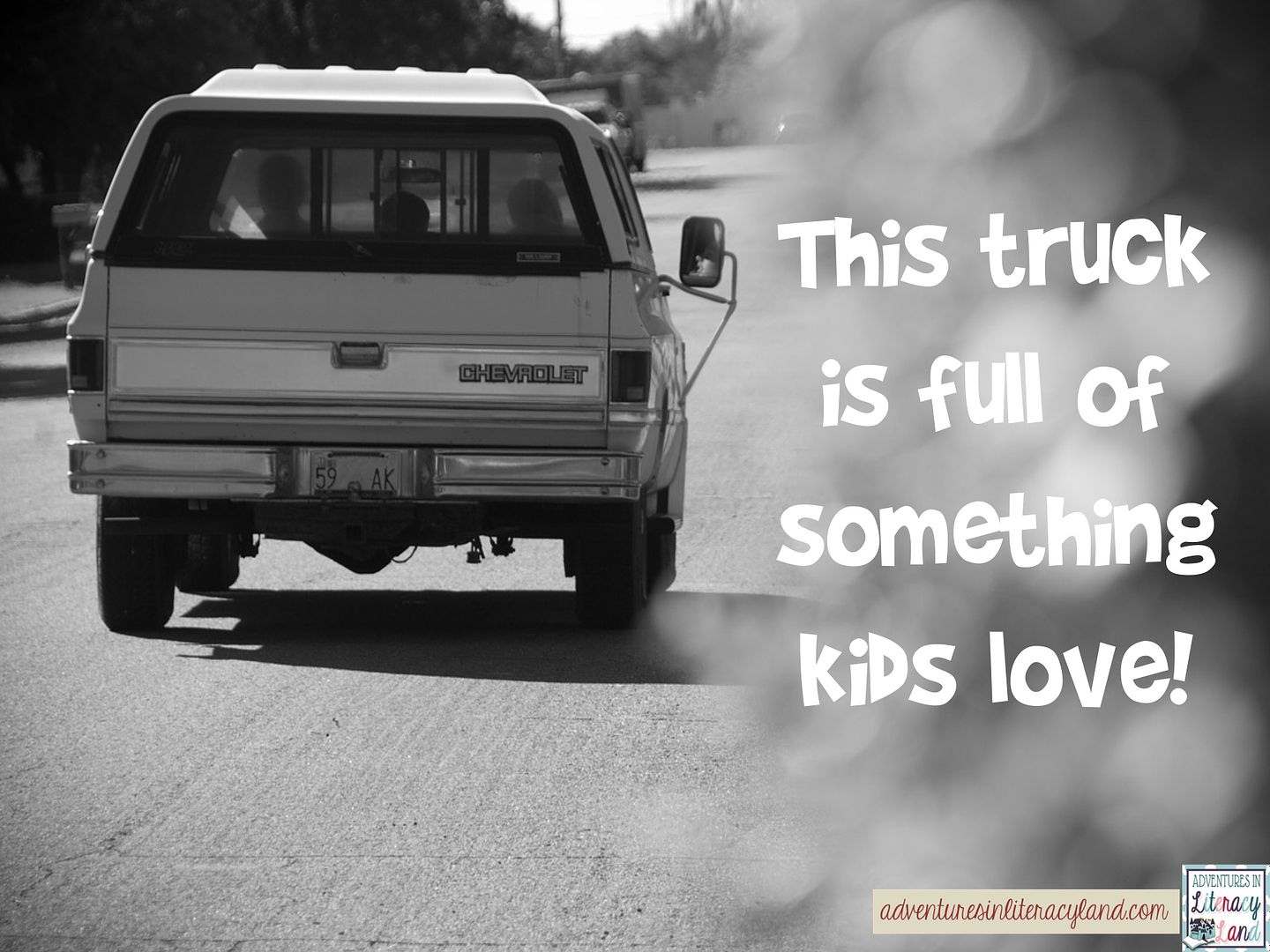
It's a hot July day, and kids in rural areas are outside playing and enjoying some fun with family.  This old truck comes up the road and stops right in front of their house.

They come running to it with excitement!

The teacher gets out of the truck and begins talking to the children and adults at the house about the books they read the past week.  After the children return their books from the week before, they choose five new books they can and would like to read for the next week.

Smiles light up everyone's face during this visit!

This is exactly what one high poverty rural county in Florida has done for many summers.  Their teachers work together to ensure that students have access to appropriate reading material by driving the "bookmobile" into these rural areas.  Before the children choose new books, the teacher surveys them about what they read, liked, and didn't like.  Then the students choose 5 new books to read for the next week.

What were the findings?

1.  Students who participated full time (7-10 weeks) showed the most progress.

2.  Though it didn't increase fluency or sight word knowledge, it did affect the self-concept of each child probably because they were able to choose their own books at the appropriate level.

3.  Comprehension scores of full time participants saw gains.

4.  Though students did not achieve on grade level gains by the end of the summer, they still made gains, which eliminated the "summer slide".


Is this effective?

Yes, it is effective to some extent!  There were some gains with this model, but there needs to be more intensive interventions to make significant gains in students in poverty.

Where do we go from here?

The school that started the program has continued to have weekly book visits but have also incorporated a one-on-one tutoring intervention.  This has been extremely effective, both economically and for the students.

How might this model suit your school?

Would your colleagues share in helping you with a project like this?

Let us know what you think in the comments below.  And join us again tomorrow as we continue our book study of Summer Reading:  Closing the Rich/Poor Reading Achievement Gap by Richard Allington.


9

Preventing Summer Reading Loss: What Really Works?

Wednesday, July 29, 2015


Hello Royal Readers! This week we are discussing the book Summer Reading by Richard Allington and Anne Mc-Gill-Frazen. Yesterday Andrea shared the what the research says about summer reading and economically disadvantaged children. You can read that post {here}. Today, we'll focus on chapter three.

What Have We Learned about Addressing Summer Reading Loss?


This chapter takes an in-depth look at summer reading programs and the potential they demonstrated in addressing summer reading loss. Each summer program was conducted as a study with a treatment group and a control group.

In the first study, students from high poverty elementary schools were invited to attend spring book fairs.

The project targeted books that students could read at their independent level (99% accuracy with phrasing and expression).

Additionally, the books fit into four broad categories: popular series, popular culture, culturally relevant, and curriculum relevant.

Children were given free rein to select the books they wanted to read during the summer.

Overall this program demonstrated that providing self-selected summer reading materials improves reading achievement.


Another study was conducted with summer school students.  One group of the students participated in a summer reading club for 30-60 minutes of the day while others did not.

The reading club participants gained more in reading levels, reading accuracy, and fluency than their counterparts.


In yet another study, books were mailed out to students weekly over the summer. Prior to the start of summer, one group of students participated lessons at school that modeled oral reading and comprehension strategies.

Results of the study showed that students in this group scored significantly higher than the control groups.

What Does It Mean?

The findings of these studies suggest that voluntary summer reading may help close the rich/poor reading achievement gap. By increasing the amount of voluntary reading children did over the summer months summer reading loss was eliminated and growth was made.


    Discussion Question

    How could information presented in this chapter be used to improve the summer reading program at your school?  Share your thoughts in the comment section below.  

    Stop back each day this week for additional information on Summer Reading: Closing the Rich/Poor Reading Achievement Gap.


    6